Research interests


  • Conceptual clarification and ontological commitments in physics: What can our best modern theories of physics tell us about general concepts of matter, space, time and causality? What are the best interpreations we can assign to the theories to align with their mathematical formalism and their practice by scientist?
  • Philosophy of Cosmology: What is the object of study of cosmology? How do theories, phenomenological models and data intersect to describe the behaviour of the universe? What role does cosmology, and its different probes, play for the development of theoretical research programs (Quantum Gravity, Beyond Stadard Model particles, etc.)?
  • Epistemology of Quantum Experiment: What do experiments involving quantum technologies tell us about theories, inter-theory relations, idealizations and realist ontological commitments in physics and science in general?

Current research lines


The Spacetime-Matter dichotomy in Cosmology and Astrophysics

(This project is part of the ERC project COSMO-MASTER: Philosophy of COSMOlogy: Matter And SpaceTime ERadicated Learn more )

spacetime
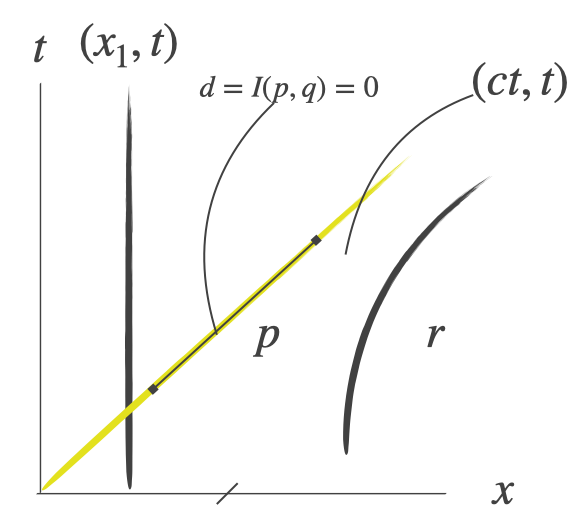
Minkowski geometry. Intuitive notion of spacetime.

We often rely on basic assumptions without noticing them. One of the most deeply rooted ideas in physics and philosophy is that everything in the universe falls into one of two categories: spacetime, which provides the stage, and matter, which occupies it.

For a long time, this way of thinking worked well. Today, however, modern cosmology increasingly challenges it. Current physical theories suggest that spacetime and matter cannot always be clearly separated. Treating them as fundamentally different kinds of things may no longer reflect how the universe actually works, and in some cases may even limit how we develop new theories.
Research activity
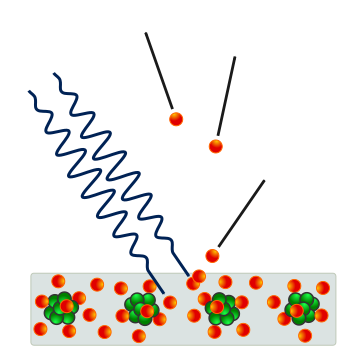
Photoelectric effect. Intuitive notion of matter.

Exploring what happens when this distinction is relaxed opens up fresh perspectives. It helps clarify which traditional philosophical debates still matter, which ones fade away, and where new questions emerge in the philosophy of physics. Rather than creating confusion, rethinking these basic concepts offers a clearer and more flexible way to understand the universe.

Breaking the spacetime matter dichotomy presents a new avenues in our understanding of conventionalism, the interpretation of General Relativity and gravitational theoris more in general, and in inter-theory relations that go beyond the classical theories.

I am the leader of three projects within this research line:

  • Inflation : the space-time matter dichotomy breaks down the moment we consider a scalar field theory for the inlationary phase of the universe.Learn more
  • Gravitational Waves: the space-time matter dichotomy breaks down if we want to use quantum techonologies, e.g. a laser interferometer to detect gravitational waves.Learn more
  • Are quantum fields matter?: The criterion for something being matter has to be carefully analyzed in the context of quantum field theory.Learn more
Philosophy of Cosmology


CMB
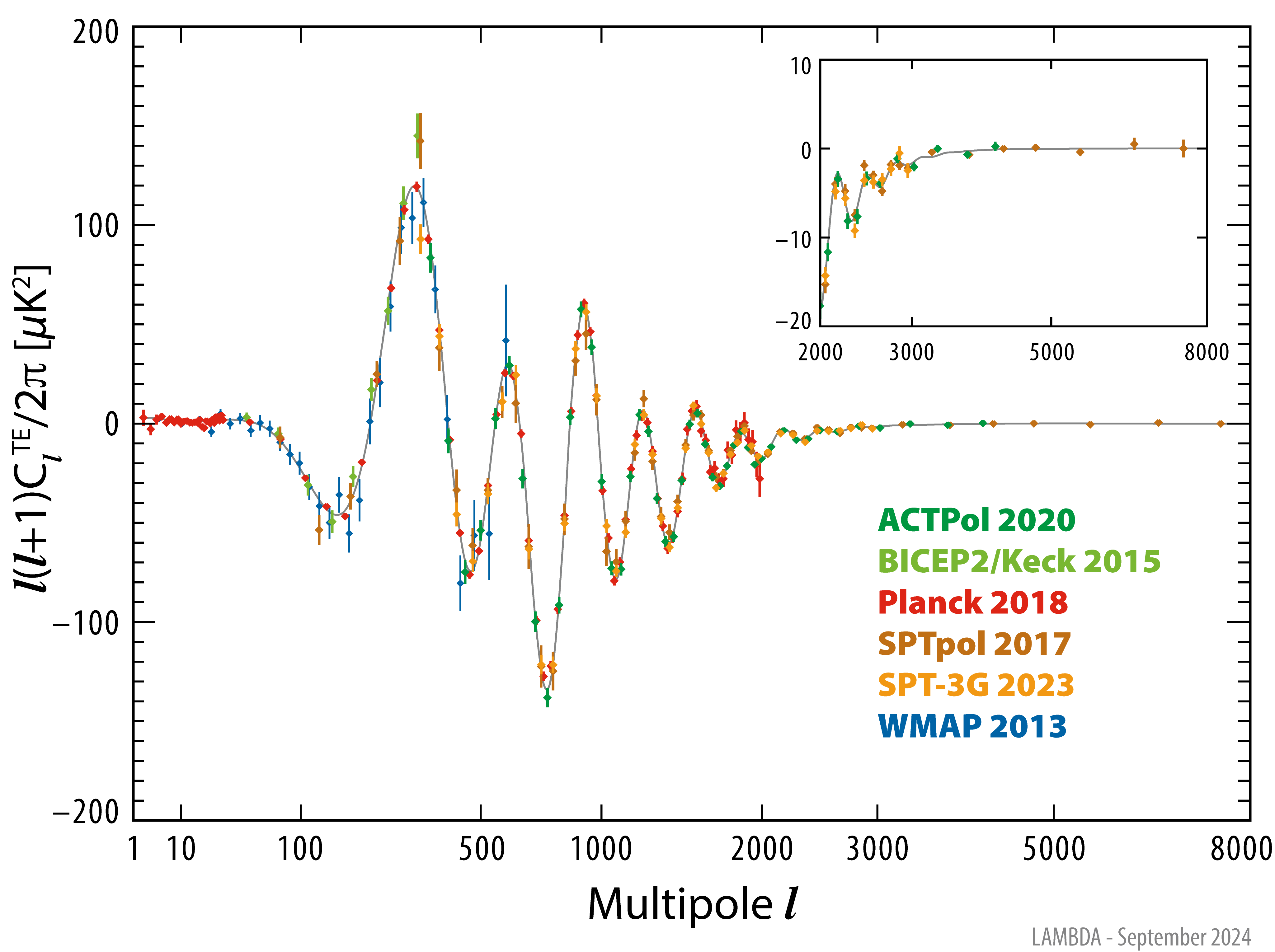
Cosmic Microwave Background, a perfect visualization of the convergence between data from several observatories (precision cosmology) and the ΛCDM model.

Modern, or precision, cosmology integrates, on the one hand, the theory of general relativity and various theories of matter (the Standard Model, thermodynamics, statistical mechanics, and fluid mechanics) adapted to an expanding spacetime, together with components whose origin remains uncertain (dark matter and dark energy), which converge in the ΛCDM model.

On the other hand, it relies on a broad set of observations—cosmic microwave background radiation, the distribution of galaxies, and supernovae—which allow not only the confirmation of this model but also the precise determination of its free parameters. Since its inception, cosmology has given rise to different philosophical interpretations. Whereas for twentieth-century particle physics it represented a new high-energy laboratory, from a more operationalist perspective—such as that proposed by Ian Hacking in his entity realism—it faces almost insurmountable difficulties in being placed on a par with well-established sciences such as Newtonian mechanics, thermodynamics, or quantum mechanics. The absence of possibilities for direct experimental intervention and its reliance on indirect observations place cosmology in a singular position within the physical sciences. Moreover, cosmology requires the combination of multiple theories to explain the different elements of the LambdaCDM model. Thus, dark matter is described through fluid-dynamical models analogous to those of ordinary matter, while dark energy is introduced as an additional constant in general relativity. This plurality generates tensions for naïve scientific realism understood as a literal interpretation of theories, as well as for entity realism, given that there are no terrestrial experiments capable of reproducing the relevant physical conditions.

The aim of the project is to examine these problems from different currents in the philosophy of science in order to shed light both on cosmology and on the philosophy of science more generally. In particular, both traditional interpretations of scientific realism and their structuralist variants will be considered, as well as pragmatist and materialist–pluralist alternatives. The central questions are: can cosmology be regarded as an independent science and, if so, which theories, instruments, and practices constitute it? Is it possible to sustain a realist thesis about its theories, entities, or structures?

A good example is Inflation, with started as a hypothesis of a pre-Big Bang phase to explain the apparent homogeneity of the Large Scale Structure of the Universe. Today it has become an important research program that intends to overlaps data and new theories, but that is hidnered by the absence of direct observation/experimentation and a full theoretical account. Learn more

Epistemology and Ontology of Quantum Experiments


In construction...

Quantum field theory in curved spacetime.


In construction... Meanwhile check an overview of the historical origin of the field. Learn more

Research outcomes


Deflating the spacetime-matter dichotomy

Antonio Ferreiro, Alex Fleuren & Niels Martens. Submitted.
Preprint.

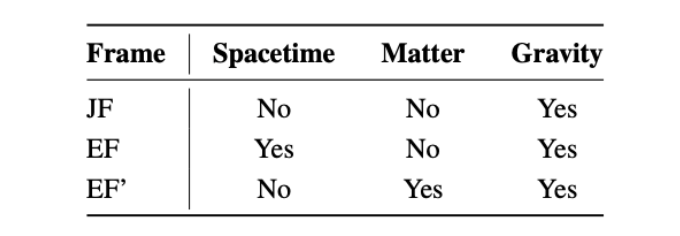
In this paper we analyse scalar-tensor theories-specific instances of which include mainstream inflation and dark energy models-in light of the spacetime-matter dichotomy. We argue that it is difficult to categorise the scalar fields as either a pure aspect of the spacetime structure or a pure form of matter, by focusing on the Jordan vs Einstein frames of these theories. We present and evaluate various interpretational options available, concluding that the spacetime-matter dichotomy becomes untenable in this context. At the same time, the ontological and conceptual category of spacetime can be decoupled from that of gravity, with the latter remaining viable in the context of scalar-tensor theories.

frame
Clasification of the scalar field of the Scalar-Tensor theories as Spacetime, Matter and Gravity for the different frames/representations.

Another critical look at inflationary cosmology

Antonio Ferreiro & Alex Fleuren. In progress.

In this paper, we undertake a critical analysis of the research program of inflationary cosmology (Inflation), with particular emphasis on the epistemological transformations of the past twenty-five years. Our discussion is structured around three central aspects. First, the modeling of Inflation, although mathematically consistent, relies on physical assumptions that given the current evidence are not fully grounded. Second, the physics of inflation is not required for the ΛCDM model, at least not in the same way as recombination physics, dark energy or dark matter. Third, on this basis, we argue that inflation cannot, in its present formulation, be regarded as an autonomous dynamical theory. Nonetheless, it provides a number of significant features that serve as exploratory tools for linking novel theoretical frameworks—for instance, string theory—with cosmological observations.

The Birth of Gravitational Particle Creation: the Enduring Legacy of Leonard Parker's 1966 Thesis

Antonio Ferreiro, Jose Navarro Salas & Silvia Pla. Accepted for publication.
Preprint.

This paper offers a historical overview of the origins and enduring significance of gravitational particle creation, a groundbreaking discovery first formulated in Leonard Parker's 1966 doctoral thesis at Harvard University. By tracing the context in which Parker developed this idea and examining its subsequent influence, the paper highlights how the concept of gravitational particle creation advanced the study of quantum field theory in curved spacetime and profoundly shaped modern cosmology, as well as the quantum theory of black holes.